
Don’t Let AI Hurt Your Agency: The Pros & Cons of AI for Insurance Agents

Last Updated: 7/20/2026
Like professionals in any industry, insurance agents have gone all-in on AI tools to help them streamline their day-to-day operations. Generative AI tools like ChatGPT, Gemini and Claude are allowing agents to accomplish more than they ever have before, turning complex and repetitive tasks into simple jobs that can be wrapped up in just a few minutes just by typing a simple prompt into your LLM of choice.
It almost seems to be too good to be true, doesn’t it?
AI tools have become so popular among insurance agents because of the convenience that it offers that most of them aren’t stopping to ask themselves the tough questions:
- Are these solutions actually working?
- What are the downsides of using AI?
- How much time am I actually saving?
- How does AI fit into my overall strategy?
According to the 2026 Big ‘I’ Agents Council for Technology Tech Trends Report, 68% of insurance agency intend to increase AI tool usage by the end of 2026. However, only 13% of them have AI-usage policies in place, and only 8% claim to be using AI strategically. Without a solid strategy and guidelines in place, agents run the risk of causing damage to their agencies, their brand, and their income.
It’s pretty tempting to offload certain tasks to AI, allowing agents to accomplish more with their valuable time. Writing blogs, drafting emails, performing research, building a social media calendar – what might have taken an agent several days to work through can now be done with a few simple prompts. Sometimes, though, it’s worthwhile to take the time to do things correctly versus taking the faster, easier route.
In this blog, we examine how insurance agents are utilizing AI tools in their daily operations, and delving into the pros and cons of these practices. Learn why AI usage can be beneficial and detrimental – and why it all depends on how your agency is utilizing it.
How Are Insurance Agents Using AI?
To start off, let’s take a look at how agents are using public AI tools like ChatGPT. In the insurance industry, agents have a ton of responsibilities when it comes to their daily business operations, which is why so many of them have begun to integrate AI tools into their workflows. From independent agents to agency owners, every level of an organization can benefit from AI in some capacity. Here are a few of the most popular ways that agents are leveraging AI:
- Writing emails and social media posts
- Generating blog articles
- Summarizing meetings
- Creating marketing copy
- Drafting client communications
- AI-powered CRM workflows
- Website chat assistants
- Automated lead nurturing
- AI-generated video content
- Voice AI for inbound call handling
- Sales coaching and call analysis
These are all great uses of AI tools, when used correctly and thoughtfully. Each of them likely saves agents valuable time, enabling them to focus their efforts on other parts of their business. In this way, agents can develop the basis of an AI strategy.
However, they must also consider the downsides, as well as the upsides, before implementing some of these tactics. With that in mind, let’s dive into the pros and cons of using AI to run an insurance business.
The Cons of AI for Insurance Agents
Many people are enamored with AI because of the simplicity and convenience it offers, allowing agents to gather insights and build content in mere moments. But few agents are aware of the downsides of these tools, and why an overreliance of AI can be detrimental in the long term. Let’s take a look at a few of the cons of AI when it is used improperly.
AI is often incorrect
Be totally honest: When you have an LLM generate information for you, how often are you checking the sources that the system is pulling from? Are you absolutely certain that the information is correct and accurate before you post it on socials or share it in your blog?
The truth is that AI isn’t infallible. Don’t believe me? You can even ask your favorite LLM if the information they provide is always accurate, and they will tell you, in no uncertain terms, that it cannot guarantee accuracy. It does not inherently know any facts – it simply pulls data from sources across the web and collates them into a brief response.
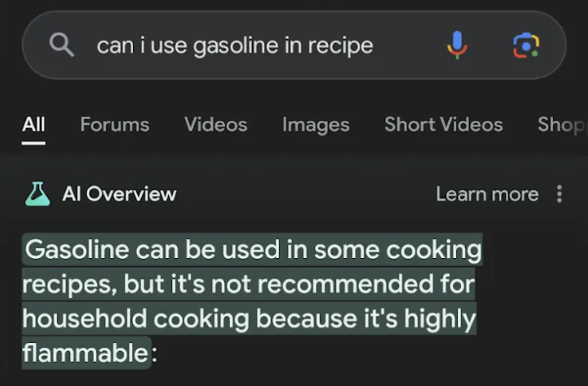
As a result, if the information it pulls is outdated, conflicts with other pieces of information, or is altogether false, it will spit out an incorrect response to your prompt. Some AI platforms refer to this as “hallucination.” And troublingly, the BBC found that 45% of AI answers had at least one significant error.
While it may be tempting to copy and paste an AI response into an email or social post, it’s absolutely vital that agents review this information thoroughly prior to sharing it. Sharing these hallucinations as if they are facts is problematic on many levels, but it directly impacts your credibility as an agent – and credibility is hard to win back.
AI-generated content only takes you so far
You probably already know that solid content is the cornerstone of a robust digital presence. Writing longform content, however, can be a daunting task for many agents – and many of them are offloading this work to their favorite AI platform, which can produce a full 1200 word article in a few seconds about virtually any topic. The content is often comprehensive and formatted in a blog-ready format, allowing agents to update their blogs within a few minutes.
The problem is that this content is not super valuable when it comes to your SEO. We’ve talked about the importance of SEO for insurance agents previously on our blog, and one of the key points of that article is that content is only valuable if it is unique, demonstrates the author’s expertise, and displays their authoritativeness about the subject.
An article written by AI has none of these qualities, as the information is pulled from a variety of other websites and cobbled together into a readable format. Nothing about it is new, insightful, or unique – all of the information already exists elsewhere online. All you’re doing is repackaging it for your readers. But the truth is, this repackaged content is essentially valueless in terms of SEO. To make matters worse, other agents are likely generating the exact same articles for their own blogs, which dilutes the power of your AI-generated content even more. In order to get real results from your content, you need to put the work in and add your own thoughts, data, and experience into the piece.
Your audience can detect inauthenticity
Humans are excellent at finding patterns. It’s the evolutionary trait that allows us to learn new things very efficiently. This same pattern-recognition also allows us to detect when content has been written by AI – our brains can pick up on microsignals within writing and images that indicate it’s AI-generated. While some people may not care about this, others very much do.
To some, it’s a sign of minimal effort, and can cause your audience to see through the repetitive sales language produced by an AI model, which can resonate poorly with potential customers. Here’s an example. We received a few requests from potential guests on our Insurance 360 podcast. Looking at the emails we received, it’s not hard to spot which ones were written with AI – because they all use the same phrasing and formatting. Here are a couple of examples:
“Your AEP 2027 prep episode from last month made the case well: the agents who win aren’t scrambling at the last minute, they’re doing the work long before kickoff. Digital visibility is part of that preparation too.”
“Your episode from last month on AEP preparation got me thinking about the ancillary cross-selling angle you covered. Advanced regenerative therapies like peptides are exactly the kind of emerging trend that separates agents who are preparing well ahead of the season from those scrambling at the last minute.”
“Your episode from last month on AEP prep actually got me thinking about him. The conversation around long-term preparation and having the right strategy in place before crunch time maps directly to how John thinks about stewardship and deferred giving.”
Your customers may be receiving emails from other agents vying for their attention. Shouldn’t you stand out by sending them a unique message, rather than resorting to the default response from ChatGPT?
The Pros of AI for Insurance Agents
At Pinnacle Financial Services, we understand that AI can – or perhaps has already become – an integral part of your business strategy. Despite its flaws, it’s easy to recognize that LLM platforms can help agents increase their productivity – as long as it is implemented mindfully and strategically. Here are a few ways that agents are successfully leveraging AI in their daily operations.
It’s a massive time saver for simple tasks
For simple, relatively low-value tasks – such as creating social media post text, writing ad headlines, and website metadata – AI is a perfect way to offload that time and effort. Realistically, AI is going to produce content that is perfectly acceptable in these instances and will probably require very few corrections or alterations. However, it’s never a bad idea to confirm the accuracy of the output before you implement any of this content.
It’s a valuable research tool
LLMs are an excellent way to research complex topics and condense the information into a format that is more digestible. The AI may even prompt you with additional thoughts or questions that could cause you to delve deeper into a subject, broadening your understanding. This can be a great way for agents to brainstorm insurance lead generation strategies, marketing ideas, and more. For certain pieces of information, such as data and anything that may border on compliance, you’ll want to confirm this manually.
AI can help with content generation
The operative word here is “help.” At the end of the day, AI can really only provide a jumping-off point for your digital content. If you want to truly succeed with your content, then you need to have a more hands-on approach.
For many agents, the idea of writing several pages of content for a web page or blog can be completely daunting, and the convenience of generating this content with AI in just a few minutes is alluring. However, putting your personal spin on a topic, sharing your own data, and relaying your own insights will help to transform your content into something that is unique and valuable. Feel free to use AI to help you build a first draft of a blog or webpage, but keep in mind that your personal touch is what makes it all meaningful.
Marketing automation is simplified with AI integrations
There are a number of technological tools out there to help agents streamline their efforts and consolidate customer communications into a single platform. If you’ve used a CRM designed for insurance agents, like Pinnacle’s BOSS CRM, then you may already be familiar with the AI tools that are built into those platforms. These automated solutions allow agents to rapidly draft mass emails, texts, and marketing automation workflows to support their marketing and outreach. While some marketing automation systems may have a steep learning curve, AI assistants can make it much easier to get workflows up and running. These native tools are a powerful example of how AI can be beneficial when it is a tool that has been seamlessly integrated into a broader system.
The Takeaway: AI Is a Tool, Not a Solution
As AI adoption continues to grow within the insurance industry, agencies and independent agents must learn how to best leverage this powerful tool. While AI may very well evolve into a more comprehensive solution in the future, agents need to be cognizant of its current limitations. As a leading national FMO, we pride ourselves on being at the forefront of technology for our agent partners, which is why it’s important to remember that a consultative approach, a wealth of knowledge and experience, and a human connection is what makes an agent successful.

Bob Brzyski
Vice President of Marketing

